
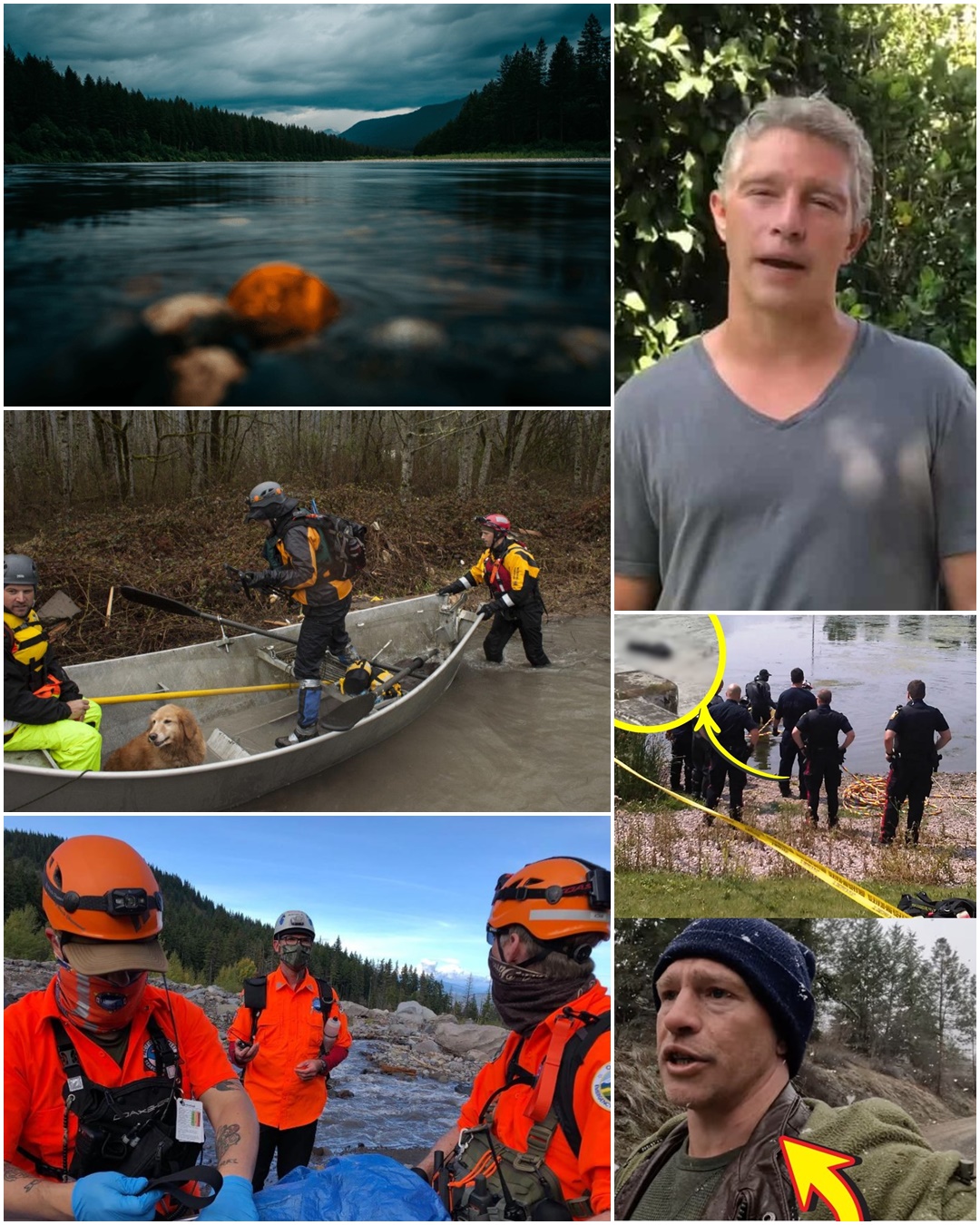
The search for Matt Brown began with a disturbing 911 call and ended with a discovery that many followers of the case still find difficult to forget.
According to reports, a witness contacted authorities after seeing a man sitting in shallow water along the Okanogan River near Oroville, Washington. The witness later said they briefly looked away. Moments later, they heard a loud sound. When they turned back, they reportedly saw the man FACE-DOWN IN THE WATER, being carried away by the river’s current.
When authorities arrived, the man was gone.
Investigators searching the area reportedly discovered A FIREARM near the location where the individual had last been seen. The discovery immediately intensified concerns and added urgency to the search.
But finding Matt would prove far more difficult than anyone expected.
Heavy rainfall had transformed the Okanogan River into a dangerous and unpredictable environment. Fast-moving currents, muddy water, and hazardous conditions repeatedly disrupted search efforts. At one point, official search operations were reportedly suspended because conditions had become too dangerous for rescue personnel.
Days passed without answers.
Boats searched the river.
SONAR EQUIPMENT was deployed.
DIVERS entered the water.
SEARCH DOGS were brought in.
Yet despite the extensive resources involved, no sign of Matt could be found.
Then came a breakthrough from an unexpected source.
According to members of a private search team, the discovery began when kayakers noticed A BROWN JACKET floating on the surface of the river.
At first glance, it may not have seemed significant.
But the search team decided to return and examine the area more closely.
That decision changed everything.
After concentrating their efforts around the location of the jacket, searchers discovered a body nearby. The remains were found approximately TWO MILES — ABOUT 3.2 KILOMETERS — downstream from the place where Matt had reportedly last been seen.
Investigators later determined that the jacket belonged to Matt, and reports indicated that DNA evidence linked the garment directly to him.
The discovery revealed a strange paradox at the heart of the search.
The Okanogan River had turned MURKY BROWN after heavy rainfall. Visibility was extremely poor. Matt was reportedly wearing DARK CLOTHING that blended into both the water and the riverbank. The location where he was ultimately found was remote, isolated, and difficult to access using conventional search methods.
Search team member Moore later described the operation as being like “FINDING A NEEDLE IN A HAYSTACK.”
According to Moore, the team could not simply scan the river from a large boat and expect to find answers. Instead, they were forced to inspect the shoreline meter by meter using kayaks because almost nothing appeared unusual from a distance.
The search was slow.
Exhausting.
And incredibly frustrating.
Then they spotted the jacket.
They turned around.
They checked the area carefully.
And eventually they found Matt.
In other words, the jacket was not merely another piece of evidence. It became the clue that focused attention on the exact stretch of river where the search would finally come to an end. Without it, teams might have been forced to continue searching dozens of additional kilometers of river with no clear indication of where to concentrate their efforts.
Perhaps the most haunting detail is the contrast.
For days, trained professionals used BOATS, SONAR, DIVERS, SEARCH DOGS, and countless hours of manpower in an attempt to locate Matt.
Nothing worked.
The river revealed nothing.
Then, according to the search team’s account, the breakthrough came from something remarkably small: A SINGLE BROWN JACKET FLOATING ON THE WATER.
For many people following the case, that detail has become one of the most unsettling aspects of the tragedy. Sophisticated technology struggled against the river’s currents and muddy water. Yet the clue that ultimately led searchers to Matt was not a machine, not a tracking device, and not a major piece of evidence.
It was a piece of clothing silently drifting downstream.
A small object in a vast river.
A detail that could easily have gone unnoticed.
And yet, according to those involved in the search, it was the detail that changed everything.