
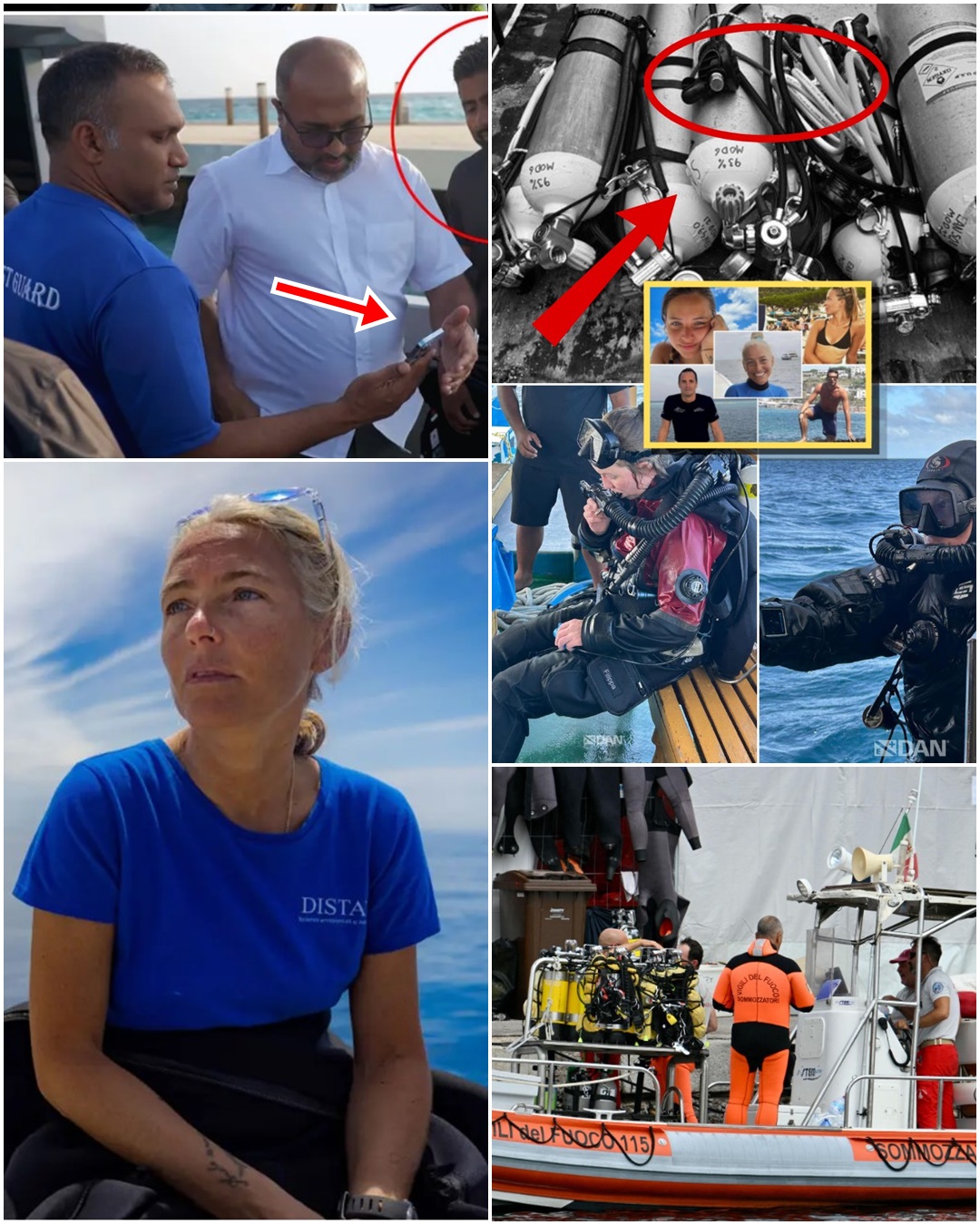
As investigators continue digging deeper into the deaths of five Italian divers inside the deadly underwater cave system in the Maldives, disturbing new questions are now emerging about the permits, agreements, and possible “contracts” connected to the tragic expedition.
While the FULL DOCUMENTS have NOT yet been publicly released, several international reports suggest that important details surrounding the group’s authorization and dive approval process are now under intense scrutiny by both Maldives authorities and Italian prosecutors.
And according to many experts following the case, what is being uncovered could become one of the MOST CONTROVERSIAL aspects of the entire disaster.
Sources close to the investigation reportedly say the Italian group had official permission related to MARINE RESEARCH activities in the Maldives, including studies involving marine life and soft coral ecosystems. However, Maldives authorities allegedly stated they were NEVER INFORMED that the divers intended to perform an EXTREME DEEP CAVE DIVE inside one of the region’s most dangerous underwater cave systems.
That detail alone has shocked much of the diving community.
Because according to several reports now circulating internationally, the vessel connected to the expedition — the MV DUKE OF YORK — allegedly held authorization for RECREATIONAL DIVING operations only, with standard recreational depth limits reportedly around 30 METERS.
But investigators now believe the group may have descended to nearly 50 TO 60 METERS deep inside the cave system.
And that changes EVERYTHING.
In the Maldives, deep cave penetration dives at those depths are NOT generally treated as ordinary recreational tourism dives. Technical diving specialists describe operations like this as closer to a HIGH-RISK TECHNICAL EXPEDITION — requiring:
- advanced certifications,
- specialized gas planning,
- redundant life-support systems,
- multiple emergency procedures,
- and extensive cave diving experience.
That is why authorities are now reportedly examining exactly WHAT THE GROUP SIGNED before entering the water.
Investigators are said to be reviewing: pre-dive agreements, liability waivers, safety briefings, permit classifications, and dive planning documents connected to the expedition.
One of the biggest questions now being asked is whether the dive was officially described on paper as a NORMAL RECREATIONAL DIVE… while in reality it allegedly involved:
- EXTREME DEPTH,
- CAVE PENETRATION,
- STRONG CURRENT,
- AND TOTAL DARKNESS INSIDE AN OVERHEAD ENVIRONMENT.
If true, legal experts say this could become an ENORMOUS ISSUE.
Because cave diving at those depths is widely considered one of the MOST DANGEROUS forms of diving in the world. Divers cannot simply ascend directly to the surface during an emergency. Above them is solid rock. Visibility can collapse to ZERO within seconds if sediment is disturbed. And a single wrong turn may trap an entire team deep inside the system.
Technical divers warn that operations like this typically require: specialized cave diving certification, high-level decompression planning, backup gas systems, and equipment far beyond what ordinary recreational divers carry.
That is why prosecutors in Italy are now reportedly investigating whether there may have been:
- SAFETY VIOLATIONS,
- NEGLIGENCE,
- OR A FAILURE TO PROPERLY ASSESS THE TRUE DANGER OF THE DIVE.
Authorities are also said to be examining whether the company organizing the expedition fully understood how dangerous the cave system actually was before allowing the operation to proceed.
Some experienced Maldives divers have already described the cave as notorious within the technical diving community — a place known for: powerful currents, tight passages, poor visibility, and deadly disorientation risks.
One particularly disturbing question now spreading online is whether participants were FULLY INFORMED about the real nature of the dive before entering the water.
Internet discussions have exploded with speculation that:
- the danger may have been “downplayed,”
- the dive may have been presented too casually,
- or the expedition may have appeared less extreme on paper than it truly was underwater.
At this stage, however, there is STILL NO OFFICIAL EVIDENCE proving that organizers intentionally violated the law or deliberately concealed the risks from the divers.
But investigators are reportedly taking the matter extremely seriously.
Italian prosecutors are now reconstructing: the entire dive timeline, equipment setup,
communication between organizers, permit requests, and approval procedures leading up to the tragedy.
Meanwhile, Maldives authorities have already suspended operations connected to the MV Duke of York while the investigation continues.
For many technical diving experts, the emerging controversy surrounding the permits and paperwork may become just as important as the underwater reconstruction itself.
Because the deeper investigators look into this tragedy, the more terrifying the central question becomes:
WAS THIS DIVE EVER SUPPOSED TO HAPPEN IN THE FIRST PLACE?
And if the operation was treated like an ordinary recreational dive despite conditions resembling an EXTREME TECHNICAL CAVE EXPEDITION, experts fear the disaster may have begun LONG BEFORE the group ever entered the water.